
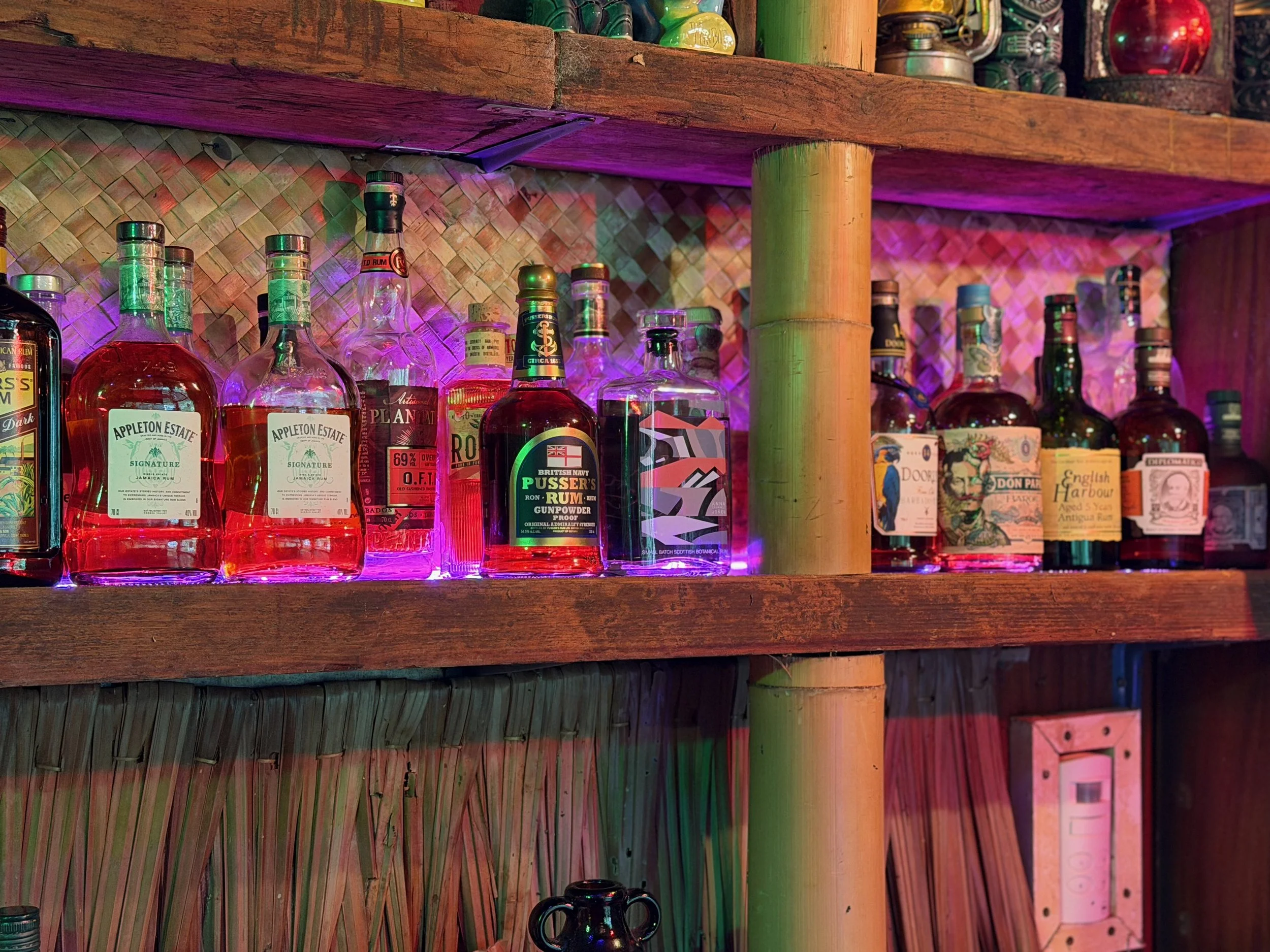
Rum Guide
What Is Rum?
Rum is a distilled spirit made primarily from sugarcane byproducts, usually molasses, but sometimes fresh sugarcane juice or sugarcane syrup. It originated in the Caribbean and became one of the world’s defining spirits through colonial trade, naval history, and cocktail culture.
Rum is incredibly broad stylistically. Depending on where and how it’s made, it can be:
Light and crisp
Rich and funky
Grassy and vegetal
Sweet and dessert-like
Smoky and oak-driven
A Short History of Rum
Early Origins
Rum production began in the Caribbean during the 17th century, especially in sugar-producing colonies like:
Barbados
Jamaica
Cuba
Sugar plantations produced huge amounts of molasses, previously considered waste. Enslaved workers and plantation operators discovered it could be fermented and distilled into alcohol.
Barbados is often credited as the birthplace of commercial rum production.
The Age of Sail & Colonial Trade
Rum became central to:
The British Royal Navy
Caribbean trade
Transatlantic “Triangle Trade”
The British Navy issued daily rum rations (“tot”) to sailors for centuries until 1970.
Rum was also deeply tied to slavery and plantation economies, a painful part of its history.
Modern Rum
In the 20th century:
Cuban-style light rum fuelled cocktail culture
Tiki bars popularised tropical drinks
Premium aged rums emerged
Modern craft distilleries revived traditional methods
Today, rum ranges from inexpensive mixing spirits to premium sipping bottles comparable to whisky or cognac.
White Rum
Usually
Light bodied
Filtered after aging
Clean and subtle
Common in
Mojitos
Daiquiris
Piña Coladas
Typical Flavours
Vanilla
Citrus
Light sugarcane sweetness
Famous Producers
Bacardí
Havana Club
Don Q
White Rum Selection
Bacardi Carta Blanca Superior
Everyday white rum, great when a clean taste is required.
Recommended for Mojito.
Wray and Nephew Overproof
Jamaica is powered by Wray and Nephew. It has a serious kick and brings the funk to white rum.
Recommended for Wray and Ting (Grapefruit Soft Drink).
Veritas
A collaboration between Hampden and Foursquare, two of the greatest rum producers in the world. This funky rum has a complex profile that will up your cocktail game.
Recommended for Daiquiri.
Golden Rum
Usually
Aged in Oak barrels
May be coloured artificially
Common in
Mai Tai
Punches
Zombie
Sipping
Typical Flavours
Caramel
Spice
Toasted oak
Brown sugar
Famous Producers
Appleton
Mount Gay
El Dorado
Foursquare
Golden Rum Selection
Appleton Signature
Everyday Jamaican golden rum, super versatile, great value. Appleton has been making rum for over 250 years.
Recommended for most Tiki cocktails.
Doorly’s XO
Foursquare distillery in Barbados has probably won more medals for it’s rum than anyone else and has a few brands that it sells under. Doorly’s is a quality mid priced rum.
Recommended for sipping or a rum old fashioned.
El Dorado 12
Made on the banks of the Demerara river this buttery smooth rum often converts whisky drinkers to rum. This 12 year old hits the sweet spot of price and quality in the range.
Recommended for sipping or level up a Mai Tai by mixing with a good Jamaican rum.
Dark Rum
Usually
Typically heavier and richer
Sometimes with added caramel coloring.
Common in
Dark ‘n’ Stormy
Tiki cocktails
Cooking and baking
Typical Flavours
Molasses
Coffee
Dried Fruit
Baking Spice
Famous Producers
Goslings
Plataray
Myers
Dark Rum Selection
Goslings Black Seal
If you want to make a Dark ‘n’ Stormy this is the rum for you. Made in Bermuda, this rum has notes of butterscotch, vanilla and caramel.
Recommended for Dark ‘n’ Stormy,
Myers Original Dark
Classic Jamaican rum, Meyers have been around since 1879. Authentic Caribbean traditional rum.
Recommended for Mai Tai.
Plantaray OFTD
A heavyweight overproof dark rum, that will hit the spot. Guaranteed to give any drink a real uplift in terms of alcohol content and flavour.
Recommended for any time you want to make the most hardcore version of a drink.